Seven Core Families · Custom-Built · Free Samples
Precision sensors,
built to your spec
in Changzhou.
Seven core temperature-sensor families. Every product is custom-configurable — resistance value, B-value, dimensions, housing, lead wire, connector. We ship free engineering samples to your test bench within 24 hours (shipping fees may apply for some regions).
How we work
You design the spec.
We build the sample.
You verify it where you trust it most.
Most temperature-sensor catalogues hand you a fixed part number and ask you to compromise on the spec. We do the opposite — you send us the electrical, mechanical and certification requirements, we engineer and produce the sample, then ship it directly to the lab or factory you nominate.
Every parameter, configurable.
Custom per request
Ceramic / metal / fluoropolymer / ABS
2 / 3 / 4-wire, AWG 26 / 24
Within 24 h
Test it first.
Then commit.
Free
Within 24 h
Welcome
None for samples
We don't have every approval mark on the box.
So we'll send our part to whichever lab you trust.
Pt100 EMC-tested · OEM certifications on request
Direct to your lab or factory
UL · VDE · CQC · TÜV · CE · CB
R-T data, drawings, material declarations on request
PTC Motor Protection
01 / MZ6 SERIES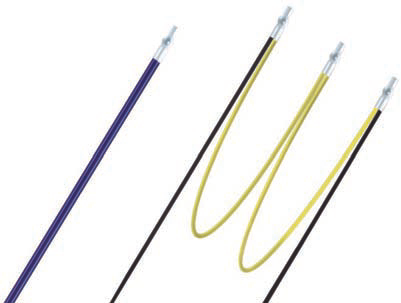
Platinum RTD
02 / Pt100 · Pt1000 · WZP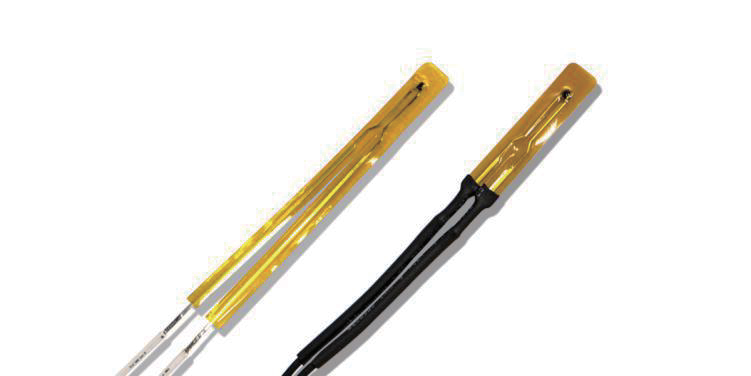
Pt100 · Fluoropolymer
Full-Fluoropolymer Pt100 / Pt1000
Embedded motor & transformer winding RTD with fully cured fluoropolymer encapsulation. Bendable, vibration-resistant, AC 2.5 kV dielectric.
View Specifications →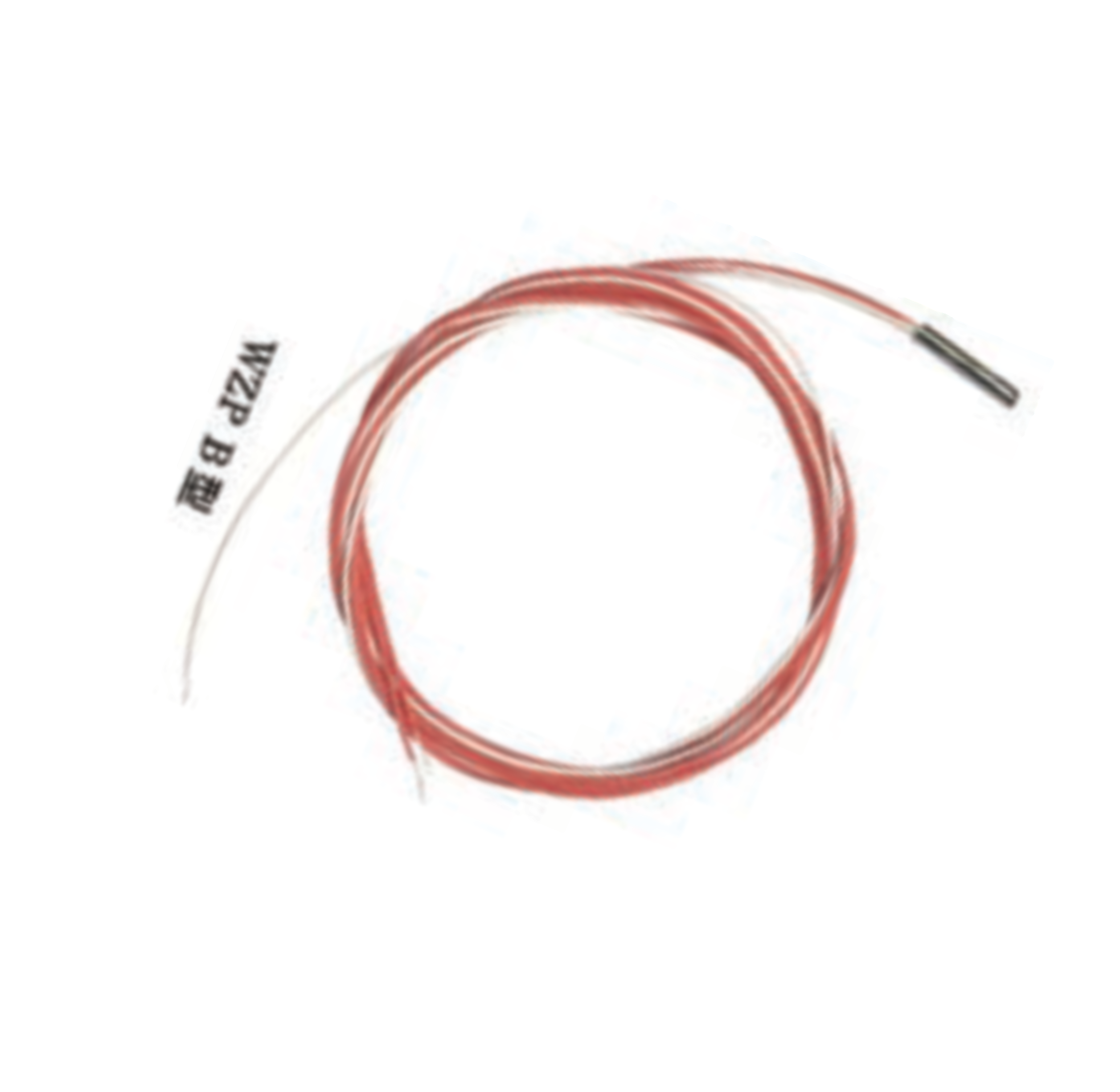
WZP Series
WZP Wire-Wound Pt100 / Pt1000
Compact 3×16, 3×20 or 4×25 mm wire-wound RTD for motor frames up to H355. Ceramic (T) or metal (B) housing.
View Specifications →NTC Thermistors
03 / CWF · INDUSTRY-BENCHMARK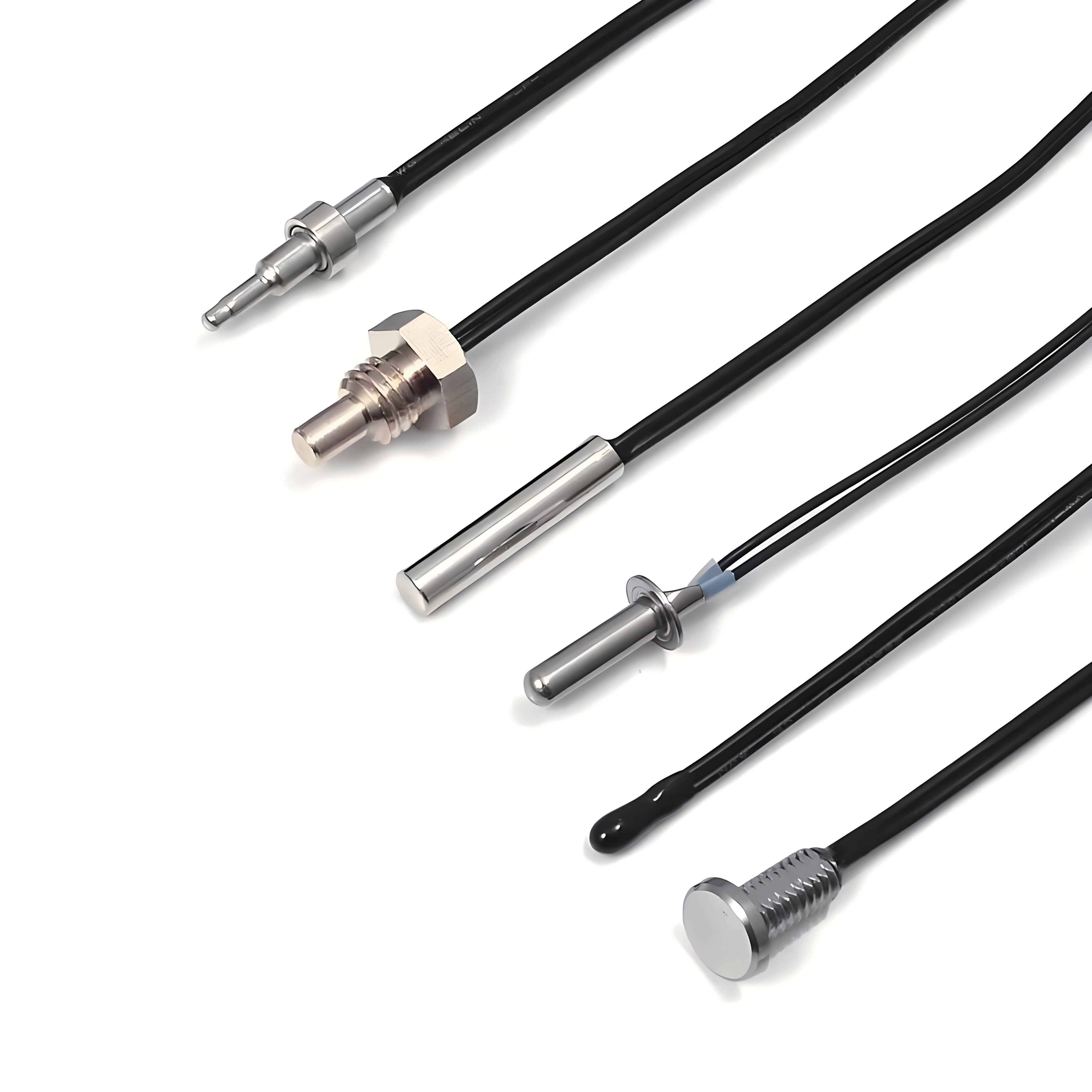
Silicon Temperature Sensors
04 / KTY81 · KTY83 · KTY84
Thermal Switches
05 / 17AM SERIES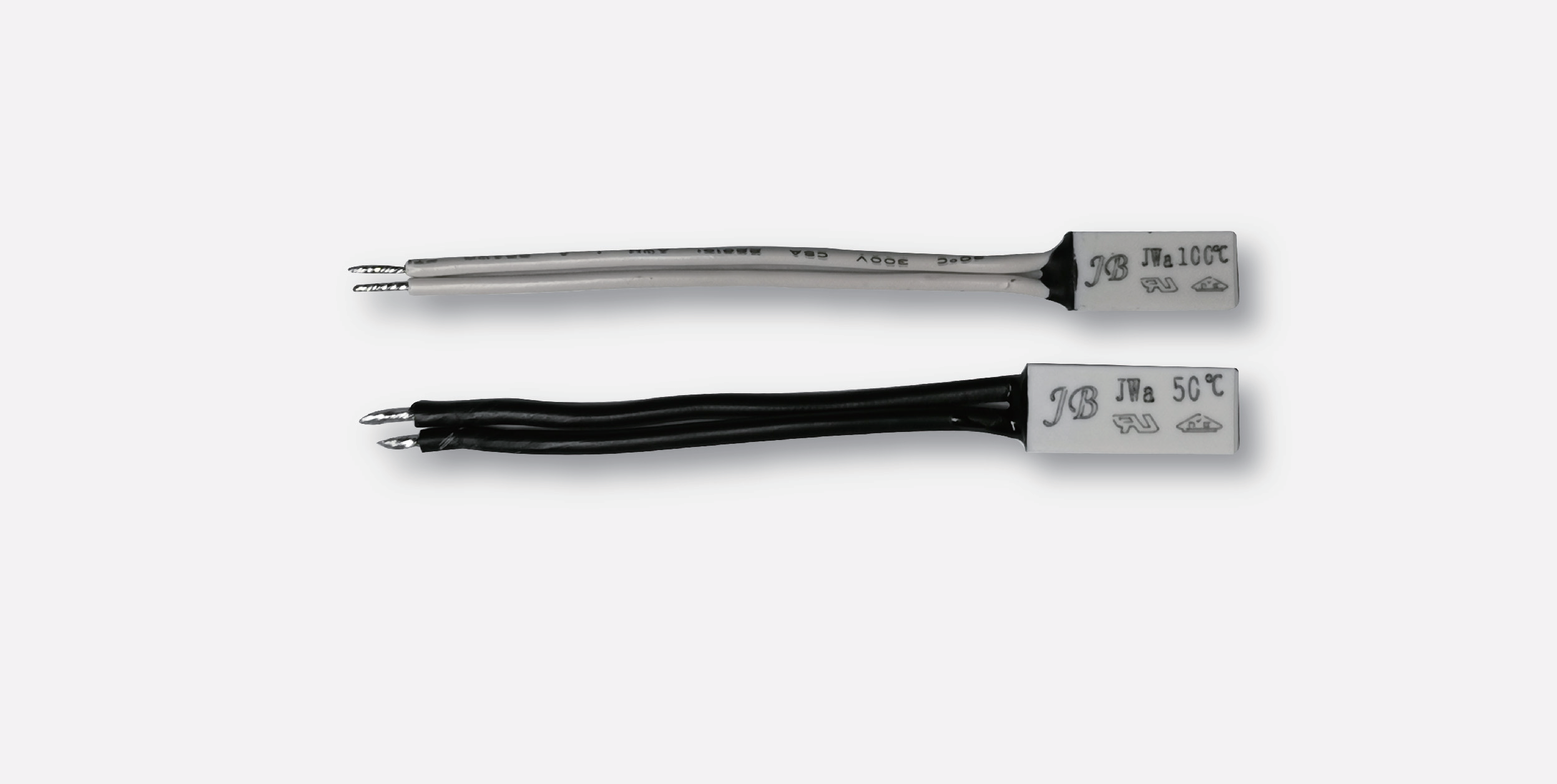
Underfloor Heating Sensors
06 / IM SERIES · INDUSTRY BENCHMARK
Custom Assemblies
07 / BUILT TO YOUR SPECBuild-to-Print
Don't see your part?
Send your R25, B-value, tolerance, housing, lead and certification spec — engineering reply within 24 hours, free samples within 48 hours.
Talk to engineeringDecision tool
Compare sensors side-by-side
Pick up to three sensor families and see every spec line up in one view. Useful when you're weighing NTC vs Pt100, or MZ6 PTC against continuous RTD monitoring.
Engineering reference
Knowledge base — how each sensor works
IEC 60751 Pt100 tolerance classes, DIN 44081/44082 PTC selection, NTC Steinhart-Hart, KTY silicon spreading-resistance, motor insulation classes — written for engineers.
Engineering FAQ
Questions OEM buyers actually ask.
PTC is a binary thermal switch — it trips when the winding reaches its rated Tk and fails safely (an open lead reads as “hot”). Standardised to DIN VDE V 0898-1-401 (formerly DIN 44081/44082) and read by every relay on the market. RTD gives continuous temperature monitoring, useful for alarming, derating and life-prediction. NTC is rarely used in motor windings — the operating range overlaps poorly and the sensitivity advantage is wasted. Most modern motors carry both a PTC chain for trip-level protection and embedded RTDs for continuous monitoring. See our DIN 44081/44082 explainer.
Class F insulation has a 155 °C hot-spot limit. Set the PTC Tk 10-15 °C below that — typically 140-150 °C. If the motor is rated F/B (Class F insulation, Class B rise — the dominant convention in premium-efficiency industrial motors), 140 °C is the conservative pick because it protects the B-rise margin that doubles insulation service life. See our insulation-class article.
For 99 % of process-industry, HVAC and motor-monitoring applications, 3-wire is the right answer. The lead-resistance cancellation is sufficient for Class B accuracy on cable runs up to ~30 m. 4-wire is mandatory when you need Class AA accuracy (calibration laboratory work), when the cable run is > 30 m, or when the cable connectors degrade over time. Our P3L variant of the JSF-M222A is 4-wire silver-shielded for these cases. See our 2/3/4-wire RTD article.
The major R25 values seen in field thermostats are 10 kΩ, 12 kΩ, 15 kΩ and 100 kΩ at 25 °C, with B-values from 3380 K to 3960 K. PT1000 (linear, no B-value) is also widely used in European commercial and smart-home systems. The exact R25 / B-value pair is fixed by the thermostat’s firmware and varies by brand and model. Get this wrong and the sensor still “works” — it just reads the wrong temperature, sometimes by several degrees. Send us the thermostat model number and we will confirm the matching stock part. See our floor sensor article.
The Beta (B-value) equation uses one constant to approximate the NTC’s R(T) curve — cheap to compute, accurate within ±0.3 °C across a 50 °C window. The Steinhart-Hart equation uses three coefficients (A, B, C) and is accurate to ±0.01 °C across the full operating range. For HVAC, appliances and battery thermistors the B-value is sufficient; for medical, calibration and precision instrumentation use Steinhart-Hart. We supply per-lot Steinhart-Hart coefficients on request. See our B-value vs Steinhart-Hart article.
Yes. The original Philips/NXP KTY81, KTY83 and KTY84 family went end-of-life some years ago. We manufacture pin-, package- and curve-compatible parts across all standard tolerance grades (KTY81-110, -120, -121, -122, -150; KTY83-110 through -150; KTY84-130 through -152). Drop-in for legacy designs, optional reel packaging and lead-bend forming for new production lines. See our KTY explainer.
Yes — engineering samples ship internationally free of charge for qualified projects. Standard ground or express shipping is included to most regions. For remote destinations or expedited courier, a freight charge may apply — we will confirm before dispatch. Standard sample dispatch is within 48 hours of order confirmation; custom housing assemblies have a 2-week first-article lead time.
We build to international standards and can arrange the certifications you need per OEM order. For market-specific certifications (UL, VDE, CQC, TÜV, CE, CB and others), we manufacture the parts to the relevant standard and ship production samples directly to your nominated third-party test house — you receive certification documentation from a body you already trust, against parts built exactly to your spec.